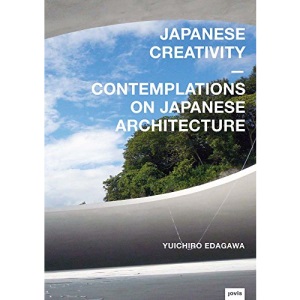
by Kengo Kuma (Foreword), Yuichiro Edagawa (Author)
What lies at the root of Japanese creativity and its architectural artefacts? In his new book, the Japanese architect Yuichiro Edagwa explores this question in detail. By analysing a wide variety of unique exemplary buildings from the sixth century to the present, he determines twelve distinctive characteristics of Japanese architectural creativity and composition, including: intimacy with nature, importance of materials, bipolarity and diversity, asymmetry, devotion to small space, and organic form. The key understanding which pervades all these characteristics is that 'parts precede the whole'. The Japanese process of creation begins with designing parts and details and ends with combining them to one edifice, instead of starting with a whole structure and working out the components afterwards. With Japanese Creativity - Contemplations on Japanese Architecture Edagawa provides a personal and comprehensive understanding of Japanese creativity and the architectural process. The book gives us an inspiring insight into Japanese culture and identity, which in its essence is deeply traditional and modern at the same time.
Format: Hardcover
Pages: 184
Edition: 01
Publisher: JOVIS Verlag
Published: 31 Jul 2018
ISBN 10: 3868595082
ISBN 13: 9783868595086


 FREE UK DELIVERY
  Global shipping from £2.99
 FREE UK DELIVERY
 30 Day Refund Guarantee