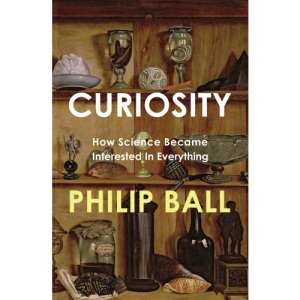
by PhilipBall (Author)
There was a time when curiosity was condemned. To be curious was to delve into matters that didn't concern you - after all, the original sin stemmed from a desire for forbidden knowledge. Through curiosity our innocence was lost. Yet this hasn't deterred us. Today we spend vast sums trying to recreate the first instants of creation in particle accelerators, out of pure desire to know. There seems now to be no question too vast or too trivial to be ruled out of bounds: Why can fleas jump so high? What is gravity? What shape are clouds? Today curiosity is no longer reviled, but celebrated. Examining how our inquisitive impulse first became sanctioned, changing from a vice to a virtue, Curiosity begins with the age when modern science began, a time that spans the lives of Galileo and Isaac Newton. It reveals a complex story, in which the liberation - and the taming - of curiosity was linked to magic, religion, literature, travel, trade and empire. By examining the rise of curiosity, we can ask what has become of it today: how it functions in science, how it is spun and packaged and sold, how well it is being sustained and honoured, and how the changing shape of science influences the kinds of questions it may ask.
Format: Hardcover
Pages: 480
Publisher: Bodley Head
Published: 17 May 2012
ISBN 10: 1847921728
ISBN 13: 9781847921727
Book Overview: A tour through the history of human curiosity - from its original condemnation as sin, blossoming through the lives of Galileo and Newton, to its current role central to modern society.


 FREE UK DELIVERY
  Global shipping from £2.99
 FREE UK DELIVERY
 30 Day Refund Guarantee