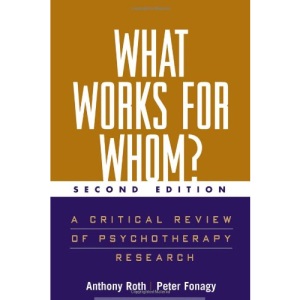
by PeterFonagy (Editor), Anthony Roth (Editor)
This acclaimed work provides a systematic, comprehensive, and balanced evaluation of the current status of all major psychotherapeutic approaches. With a primary focus on adults, detailed evidence is presented for the efficacy of widely used interventions for frequently encountered mental disorders and specific populations. The book also explains the concepts that underpin psychotherapy research, examines methodological challenges in translating research into practice, and considers the impact on outcome of factors common to all therapies, such as therapist and patient characteristics.
Format: Hardcover
Pages: 661
Edition: 2
Publisher: Guilford Press
Published: 23 Dec 2004
ISBN 10: 1572306505
ISBN 13: 9781572306509
The best-titled book in the psychotherapy field returns for a triumphant second edition. The original authors have updated their analysis of the literature using an approach that is calm in tone, liberal in outlook, and judicious in evaluation. They are passionate about evidence-based practice and the proper use of clinical judgment, and they anticipate an evolution of existing psychotherapies in ways that respect necessary complexity and creativity. As experienced researchers and clinicians, they clearly describe the limitations as well as the strengths of the different research methodologies and are opposed to privileging one strategy over another. Without doubt, this book is essential reading for all psychotherapy researchers, trainers, practitioners, and students. --Mark Aveline, MD, FRCPsych, Institute of Lifelong Learning, University of Leicester, UK: and President (2003-2004), Society for Psychotherapy Research
In this era of evidence-based treatment, researchers are proud of their 'significant differences, ' and clinicians often find research based on the mean score to be wanting in the individual case. The Roth and Fonagy volume, now in its updated second edition, provides a clinically sophisticated guide to utilizing the existing research with judicious sensitivity to the client who does not fit neatly into oversimplified categories of diagnosis and treatment brands. Simply put, this is the best book on the topic. Researchers will find their work put into a broader context, and clinicians will relish a thoughtful guide through the complicated tasks of assessment and treatment planning. --John F. Clarkin, PhD, Department of Psychiatry, Weill-Cornell Medical College
Given that 'What works for whom?' is the perennial question asked by psychotherapy trainees, this superb book should be required reading in any psychotherapy course or seminar. Roth and Fonagy underscore not only the importance of understanding the answer to this question, but also the importance of asking the question in the first place. --Wendy K. Silverman, PhD, Department of Psychology, Florida International University
A worthy successor and expansion of the first edition. Readers will find comprehensive reviews of empirical outcome studies on psychosocial treatments and selected medications found helpful in working with clients with specific disorders. In addition, the book discusses methodological considerations in designing and evaluating psychotherapy outcome studies, offering a masterful exposition of this complex topic. This is a clinically useful resource that would make an excellent text for graduate students in the mental health fields. I highly recommend it. --Bruce A. Thyer, PhD, LCSW, School of Social Work, Florida State University


 FREE UK DELIVERY
  Global shipping from £2.99
 FREE UK DELIVERY
 30 Day Refund Guarantee