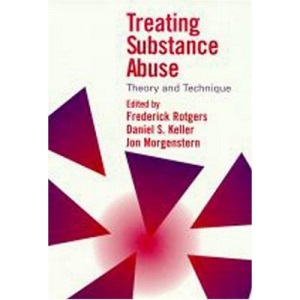
by Frederick Rotgers (Editor)
Format: Hardcover
Pages: 328
Publisher: Guilford Publications
Published: 25 Jan 1996
ISBN 10: 1572300256
ISBN 13: 9781572300255
An excellent perspective on effective psychosocial treatment for substance abuse. Because of the rich variety of approaches presented, this book allows for dealing with the many different presentations the clinician encounters. It provides a clear introduction to the latest individual, family, behavioral, and AA-oriented techniques. Valuable to the experienced clinician and student alike. A truly fine job! --Marc Galanter, MD, Professor of Psychiatry and Director of the Division of Alcoholism and Drug Abuse, New York University
Rotgers, Keller and Morgenstern have rendered the addiction services community a unique service by compiling a set of theory-practice chapters covering every major approach to substance abuse. The result is intellectually robust, clinically helpful, and highly enjoyable reading. The range and depth of these chapters will be hard to match. Therefore, this book has my strongest recommendation to and for mental health professionals, students, and all those who wish to augment their knowledge of substance abuse and its treatment. --Jerome D. Levin, PhD, Director, Alcoholism & Substance Abuse Counselor Training Program, New School for Social Research
Provides a unique coverage of both treatment theory and treatment techniques for five major and important approaches to substance abuse treatment. The wave of the future in substance abuse treatment involves some form of matching clients to the most suitable treatment approach in order to achieve the best therapeutic outcome. No longer will it be sufficient to rely on one approach. Treatment programs and professionals who wish to survive and prosper will need to master multiple approaches. This volume is an excellent resource for both novice and experienced substance abuse professionals who want to prepare themselves for emerging trends in the substance abuse field through the year 2000 and beyond. --Timothy J. O'Farrell, Ph.D., Harvard Medical School
Given the constant changes in the field of addiction, this text is extremely timely. It truly demonstrates the need for integrating scientific theory and practice. Each chapter draws on the experience and knowledge of individuals who are authorities on their respective approaches and clearly illustrates how the theories and strategies can be implemented into the techniques necessary in clinical practice. Certainly this is a text that has value to a wide audience, including both the newcomer and the seasoned clinician in the field of addiction. The presentations of the models and interventions make it a must for reading, especially at a time when effectiveness of treatment is being examined. --Raymond F. Hanbury, Jr., PhD, CAS, Director, Rehab Psychology Department, JFK Johnson Rehabilitation Institute, and President, Division 50: Addictions, American Psychological Association
Daniel S. Keller, Ph.D., is Research Assistant Professor of Psychiatry at New York University School of Medicine. Previously, he served as a faculty member of the Center of Alcohol Studies, Clinical Division, Rutgers--The State University of New Jersey.
Jon Morgenstern, Ph.D., is Assistant Research Professor at the Rutgers Center of Alcohol Studies, an Associate Member of the faculty of the Graduate School of Applied and Professional Psychology, and an active researcher conducting studies on the treatment of substance abuse, which are funded by the National Institute on Alcohol Abuse and Alcoholism.


 FREE UK DELIVERY
  Global shipping from £2.99
 FREE UK DELIVERY
 30 Day Refund Guarantee