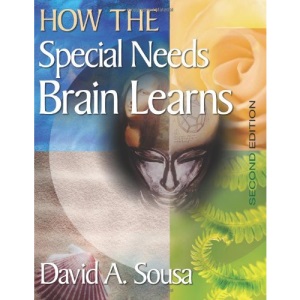
by David A . Sousa (Editor)
Since the publication of the first edition, there have been major developments in our understanding of how the human brain develops and functions. New technologies, such as transcranial magnetic stimulation, have emerged to investigate cerebral processes. Researchers in genetics have found new links to physical, psychological, and learning disorders. The discovery of mirror neurons may explain why certain learning problems arise and yield clues as to how they can be treated. All of the chapters in this second edition have undergone major revisions to include these developments and the findings of new studies.In addition, the author has: * Expanded and updated the chapters on attention disorders and autism spectrum disorders, illustrating the increased interest in these conditions * Revised the chapters on reading disabilities and emotional and behavioral disorders to reflect new research discoveries and treatments * Recast the final chapter to include a practical framework for identifying, accommodating, and motivating students with learning difficulties * Included references to more than 230 new scientific studies for those who wish to read the original research * Eliminated the chapter on sleep disorders because they do not identify a special learning need Researchers and clinicians have made considerable progress in recent years understanding the genetic and environmental triggers that result in learning problems in children and adolescents. Nonetheless, arriving at a specific diagnosis can be tricky. Teachers and parents often cannot tell the difference between a normally rambunctious child and one who may have a developmental disorder.The information here will provide educators and parents with some of the strategies they need to help their students and children lead happy and successful lives.
Format: Paperback
Pages: 248
Edition: Second Edition
Publisher: Corwin Press
Published: 12 Dec 2006
ISBN 10: 1412949874
ISBN 13: 9781412949873
Given current inclusive practices and our emphasis on reaching all students, Sousa arms us with current brain research to support the kinds of instruction and accommodations that we need to provide students in schools today.


 FREE UK DELIVERY
  Global shipping from £2.99
 FREE UK DELIVERY
 30 Day Refund Guarantee