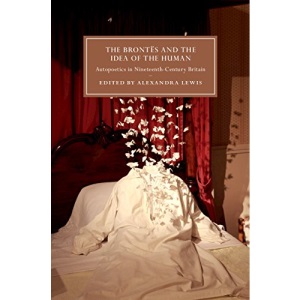
by Alexandra Lewis (Editor)
What does it mean to be human? The Bronte novels and poetry are fascinated by what lies at the core - and limits - of the human. The Brontes and the Idea of the Human presents a significant re-evaluation of how Charlotte, Emily, and Anne Bronte each responded to scientific, legal, political, theological, literary, and cultural concerns in ways that redraw the boundaries of the human for the nineteenth century. Proposing innovative modes of approach for the twenty-first century, leading scholars shed light on the relationship between the role of the imagination and new definitions of the human subject. This important interdisciplinary study scrutinises the notion of the embodied human and moves beyond it to explore the force and potential of the mental and imaginative powers for constructions of selfhood, community, spirituality, degradation, cruelty, and ethical behaviour in the nineteenth century and its fictional worlds.
Format: Hardcover
Pages: 320
Publisher: Cambridge University Press
Published: 31 Dec 2018
ISBN 10: 1107154812
ISBN 13: 9781107154810


 FREE UK DELIVERY
  Global shipping from £2.99
 FREE UK DELIVERY
 30 Day Refund Guarantee