-
Used
Hardcover
2005
$15.82
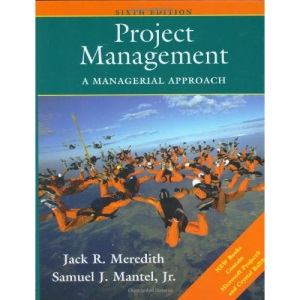
Know how to respond when things don't fall into place. Skydiving has its inherent risks. Even though a professional team, like the one depicted on the cover, can make skydiving seem perfectly choreographed; there are always uncertainties. Whether it's getting a skydiving team into the air or a new product off the ground, no project has ever been completed exactly as planned. With Meredith and Mantel's sixth edition, you'll not only learn how to select, initiate, operate, and control all types of projects; you'll also learn how to manage risks and uncertainties. Written from a managerial perspective, the text equips you with the quantitative skills, knowledge of organizational issues, and insights into human behavior that you need to do project management effectively. Updated and revised, this edition features current coverage of topics such as: Risk management; Lifecycle costing; Real options; Organizational process assets; Non-technical project terminations; The phase/quality-gate process; Requirements formulation analysis; Free trial version of Microsoft Project [registered] and Crystal Ball [registered]. This text includes a CD-ROM containing a 120-day trial version of Microsoft Project [registered] and a student version of Crystal Ball [registered]. Microsoft Project and Crystal Ball screenshots appear where relevant throughout the text. Additionally, a number of end-of-chapter exercises encourage you to apply these computer software packages to project management problems.
-
Used
Paperback
2006
$3.46
Know how to respond when things don't fall into place. Skydiving has its inherent risks. Even though a professional team, like the one depicted on the cover, can make skydiving seem perfectly choreographed; there are always uncertainties. Whether it's getting a skydiving team into the air or a new product off the ground, no project has ever been completed exactly as planned. With Meredith and Mantel's sixth edition, you'll not only learn how to select, initiate, operate, and control all types of projects; you'll also learn how to manage risks and uncertainties. Written from a managerial perspective, the text equips you with the quantitative skills, knowledge of organizational issues, and insights into human behavior that you need to do project management effectively. Updated and revised, this edition features current coverage of topics such as: Risk management; Lifecycle costing; Real options; Organizational process assets; Non-technical project terminations; The phase/quality-gate process; Requirements formulation analysis; Free trial version of Microsoft Project[registered] and Crystal Ball[registered].
This text includes a CD-ROM containing a 120-day trial version of Microsoft Project[registered] and a student version of Crystal Ball[registered]. Microsoft Project and Crystal Ball screenshots appear where relevant throughout the text. Additionally, a number of end-of-chapter exercises encourage you to apply these computer software packages to project management problems.
-
Used
Hardcover
2003
$3.46
The book is primarily intended for use as a college textbook for teaching project management at the advanced undergraduate or master's level. The text is appropriate for classes on the management of service, product, engineering projects, as well as information systems (IS). Thus, we have included some coverage of material concerning information systems and how IS projects differ from and are similar to regular business projects. The authors draw upon their personal experiences working with project managers and on the experience of friends and colleagues who have spent much of their working lives serving as project managers in the real world. Thus, in contrast to the books that are about project management, this book teaches students how to do project management. Project Management: A Managerial Approach 5E addresses project management from a management perspective rather than a cookbook, special area treatise, or collection of loosely associated articles. It addresses the basic nature of managing all types of projects - public, business, engineering, information systems, and so on - as well as specific techniques and insights required to carry out this unique way of getting things done. It deals with the problems of selecting projects, initiating them, and operating and controlling them. It discusses the demands made on the project manager and the nature of the manager's interaction with the rest of the parent organization. It covers the difficult problems associated with conducting a project using people and organizations that represent different cultures and may be separated by considerable distances. It even covers the issues arising when the decision is made to terminate a project.


 FREE UK DELIVERY
  Global shipping from £2.99
 FREE UK DELIVERY
 30 Day Refund Guarantee