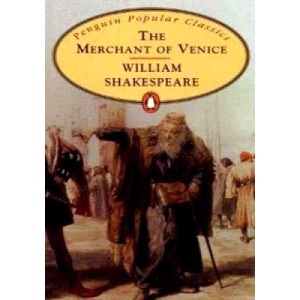
by WilliamShakespeare (Author)
'Hath not a Jew eyes? Hath not a Jew hands, organs, dimensions, senses, affections, passions'. Shylock's impassioned plea in the middle of The Merchant of Venice is one of its most dramatic moments. After the Holocaust, the play has become a battleground for those who argue that the play represents Shakespeare's ultimate statement against ignorance and anti-Semitism in favour of a liberal vision of tolerance and multiculturalism. Other critics have pointed out that the play is, after all, a comedy that ultimately pokes fun at a 16th-century Jew. In fact, the bare outline of the plot suggests that the play is far more complex than either of these characterisations. Bassanio, a feckless young Venetian, asks his wealthy friend, the merchant Antonio, for money to finance a trip to woo the beautiful Portia in Belmont. Reluctant to refuse his friend (to whom he professes intense love), Antonio borrows the money from the Jewish moneylender. If he reneges on the deal, Shylock jokingly demands a pound of his flesh. When all Antonio's ships are lost at sea, Shylock calls in his debt, and the love and laughter of the first scenes of the play threaten to give way to death and tragedy. The final climactic courtroom scene, complete with a cross-dressed Portia, a knife-wielding Shylock, and the debate on 'the quality of mercy' is one of the great dramatic moments in Shakespeare. The controversial subject matter of the play ensures that it continues to repel, divide but also fascinate its many audiences.
Format: Paperback
Pages: 128
Publisher: Penguin Classics
Published: 26 Jul 2007
ISBN 10: 0140623760
ISBN 13: 9780140623765


 FREE UK DELIVERY
  Global shipping from £2.99
 FREE UK DELIVERY
 30 Day Refund Guarantee